
An Acworth coffee shop owner is challenging Cobb County Water System over a grease interceptor requirement she says could cost her approximately $20,000, despite more than two years of operating history that she argues demonstrates her business produces nowhere near the amount of fats, oils and grease that would justify such a system.
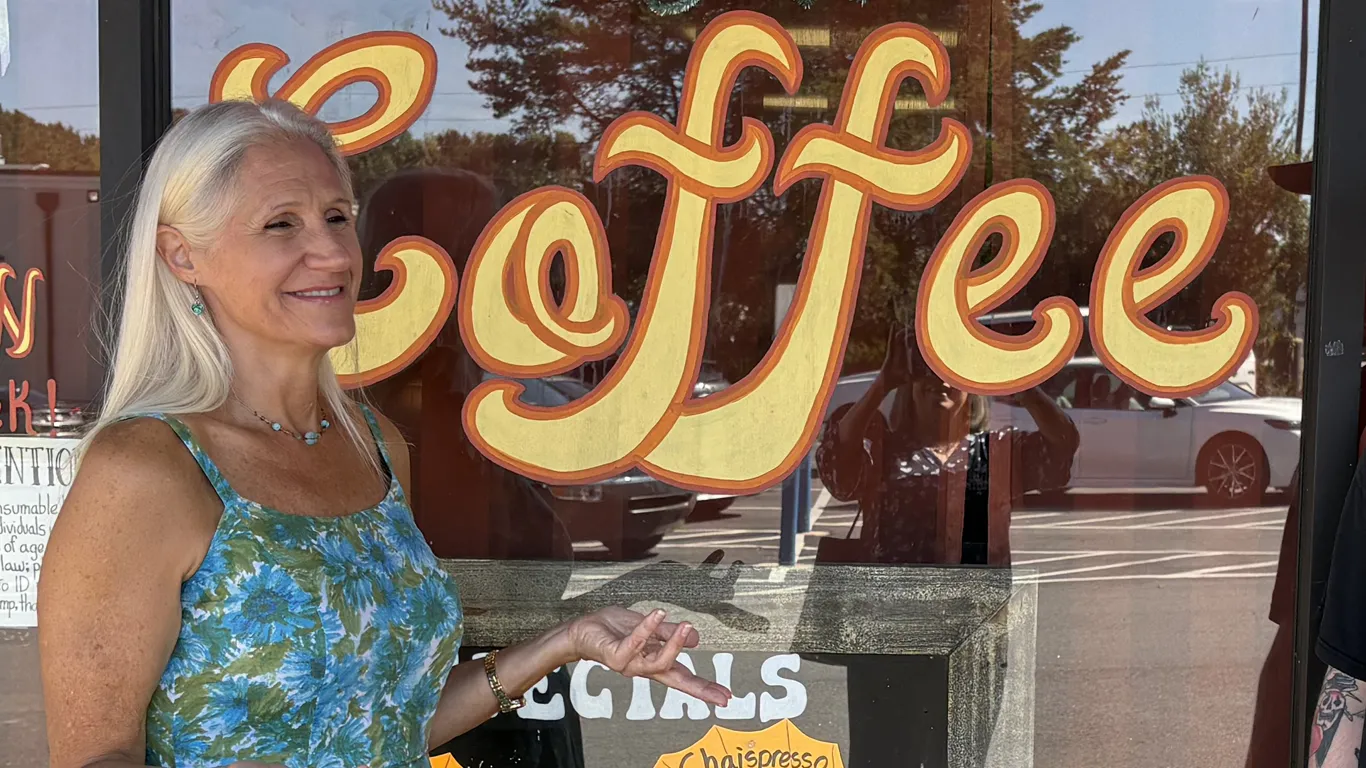
At the center of the dispute is Laura Lee Saliba, owner of The Coffee Pot, a small, family-operated coffee shop currently located on Cobb Parkway in Acworth.
Saliba plans to move her business less than two miles to a larger location, increasing from approximately 900 square feet to 1,500 square feet. But according to her formal appeal to Cobb County Water System, very little about the actual operation is changing.
Her menu will remain essentially the same. Her equipment will remain the same. Her food preparation will remain the same. And seating will increase from just six seats to eight.
So why, Saliba asks, should moving a small coffee shop less than two miles trigger a dramatically larger grease-interceptor requirement?
It is a question that deserves a clear answer.
A Coffee Shop Isn’t a High-Volume Restaurant
According to Saliba’s appeal, Cobb Water is requiring a passive interior grease interceptor with at least 100 gallons of capacity and a minimum 1,000-pound grease capacity at the new location.
That might make sense for a high-volume restaurant producing significant amounts of fats, oils and grease.
But does it make sense for The Coffee Pot?

Saliba describes her business as a single-service operation. Drinks are served in disposable cups. There is no dishwasher or food-waste grinder. The business does not cook or prepare raw food and has no stove, cooktop or griddle.
Premade muffins are sold, while premade deli sandwiches are heated in a panini maker.
Even the milk used in beverages is carefully measured, according to the appeal, limiting what is discarded down the drain.
The shop’s total water consumption is less than 3,000 gallons per month, Saliba states, and more than half is associated with equipment and fixtures that aren’t connected to the grease interceptor.
Those facts raise an obvious common-sense question: Should a small coffee shop with eight seats be regulated as though it were a large commercial kitchen?
Two Years of Reports
Perhaps the strongest part of Saliba’s argument isn’t theoretical. It is based on what has actually happened during more than two years of operation.
Cobb Water approved a 50-gallon passive interior device with a 100-pound grease capacity for The Coffee Pot in 2024.
According to Saliba’s appeal, the interceptor has subsequently been cleaned six times. She says each cleaning recovered no more than 30 gallons with minimal grease content, the unit has never approached capacity, and the business has received no violation or enforcement notice.
Cobb Water also originally required the unit to be pumped every three months. That requirement was later relaxed to once every four months.
If the existing interceptor is already more than sufficient, and Cobb Water previously determined that it could be cleaned less frequently, what evidence demonstrates that the same business now requires a substantially larger system?
That is precisely the kind of question government should be able to answer before imposing thousands of dollars in additional costs on a small business.
What Do Cobb Water’s Own Calculations Show?
Saliba’s appeal goes further by applying fixture-based calculations she says are among the methods identified by Cobb Water.
Using the dimensions of her triple-compartment sink and mop sink, Saliba calculates a projected peak flow rate of 10.96 gallons per minute. Under that method, she argues, a 15 GPM interceptor with a 30-pound grease capacity would be sufficient.
Using an alternative meal-and-flow calculation based on eight seats and a single-service kitchen, she arrives at a 40 GPM interceptor with an 80-pound grease capacity.
Her existing equipment is rated at 50 gallons with a 100-pound grease capacity.
Yet according to the July 16 requirement letter described in Saliba’s appeal, Cobb Water is requiring a 100-gallon unit with a 1,000-pound grease capacity.
Saliba argues that the specified models are heavy-duty systems intended for high-flow restaurants, commercial kitchens and even industrial food-processing applications.
That produces another simple question: What specifically about The Coffee Pot’s operation requires that level of equipment?
Regulation Should Protect the Public, Not Punish Small Businesses
Grease-management regulations exist for a legitimate reason. Fats, oils and grease entering sewer systems can create expensive blockages and infrastructure problems.
The issue isn’t whether Cobb County should regulate commercial wastewater.
It should.
The issue is whether those regulations are being applied intelligently.
Saliba points to Cobb County Code Section 122-188 and argues that the county’s permitting process should consider factors indicating an individual establishment’s potential for grease-laden waste.
Her appeal asks Cobb Water to transfer her existing permit and approved interceptor to the new location. Alternatively, she asks the county to perform an individualized calculation using her actual fixtures and operating characteristics or determine whether her operation qualifies for an exemption from a larger interceptor requirement.
Those don’t appear to be unreasonable requests.
Government regulations work best when they address actual risks rather than hypothetical ones. A commercial kitchen frying hundreds of meals every day obviously presents a different wastewater profile than an eight-seat coffee shop serving drinks in disposable cups.
Treating them the same may make administration easier for government.
That doesn’t necessarily make it sensible.
A $20,000 Question for Cobb County
For a large corporation, a $20,000 infrastructure expense might be another line item.
For a locally owned small business, it can affect whether an expansion makes financial sense at all.
Saliba says she isn’t asking Cobb County to ignore grease-management requirements. She is asking the county to recognize the equipment it previously approved, consider the documented performance of that equipment and evaluate her business based on what it actually does.
That distinction matters.
If Cobb Water has engineering, environmental or operational evidence demonstrating why The Coffee Pot suddenly requires substantially more grease capacity, the county should explain that evidence publicly and specifically.
But if the answer is simply that every food-service establishment must meet the same minimum regardless of its actual operation, then Cobb County officials should ask whether the policy has replaced judgment with bureaucracy.
Rules have a purpose.
So does common sense.
And when a small business owner can produce two years of operating history, cleaning records, fixture calculations and a previously approved county permit, taxpayers deserve to know why none of that is enough.